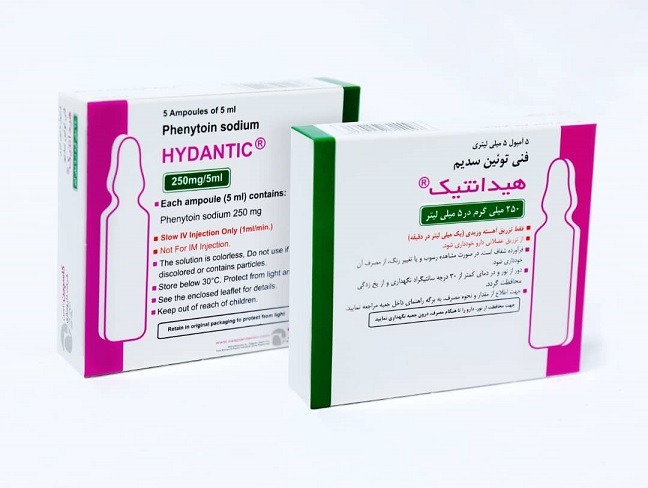
Phenytoin
Indications for phenytoin
Phenytoin is used to control all types of epilepsy except minor epileptic seizures, trigeminal neuralgia, persistent epileptic seizures, cardiac arrhythmias, and to accelerate wound healing (topically).
Mechanism of action of phenytoin
*
– Stabilization of neuronal membranes and limiting convulsive activities by increasing the output current and decreasing the inflow of sodium ions from the membranes of neurons in the motor cortex, reducing conduction velocity, prolonging the period of excitability and inhibiting spontaneous ventricular pacing activity, shortening the heart action potential
Pharmacokinetics of phenytoin
Absorption: Slow and variable (depending on the formulation), less in infants.
Bioavailability: (varies depending on the formulation) Oral 95-70%, intramuscular injection 100-83%
Onset of action: oral for 1 week, oral with loading dose (24-2 hours), intravenous 1-0.5 hours
Serum peak: fast release 3-1.5 hours, continuous release 12-4 hours
Protein binding: 80% neonates, 85% children, about 90% adults
Metabolism: Hepatic (CYP2C9)
Half-life: intravenous injection 10-12 hours, oral solution average 22 hours, chewable tablets average 14 hours
Urination
Contraindications to the use of phenytoin
Should not be used in case of porphyria, conduction tissue disorders of the heart, sinus bradycardia, sinus-atrial block, heart block grade 2 and 3, Stoke-Adams syndrome


Reviews
There are no reviews yet.